


The Forum for Strategic Studies (FORST) launched the project of a major annual conference in 2019 under the title Strategic Streams, with the aim of providing a platform for discussion of the most important strategic event affecting Europe, the Balkan region, and the world in a given year. The intention was for the conference to bring together distinguished experts, diplomats, decision-makers, professors, scholars, and senior strategists from Serbia, the region, and around the world, who would gather at the Strategic Streams conference once (or several times) a year to exchange their views, insights, and ideas on future strategic trends in the 21st century. To date, the conference has been held in 2019, 2020, 2021, 2022, 2023, 2024, 2025, and 2026.
Strategic Streams 2026
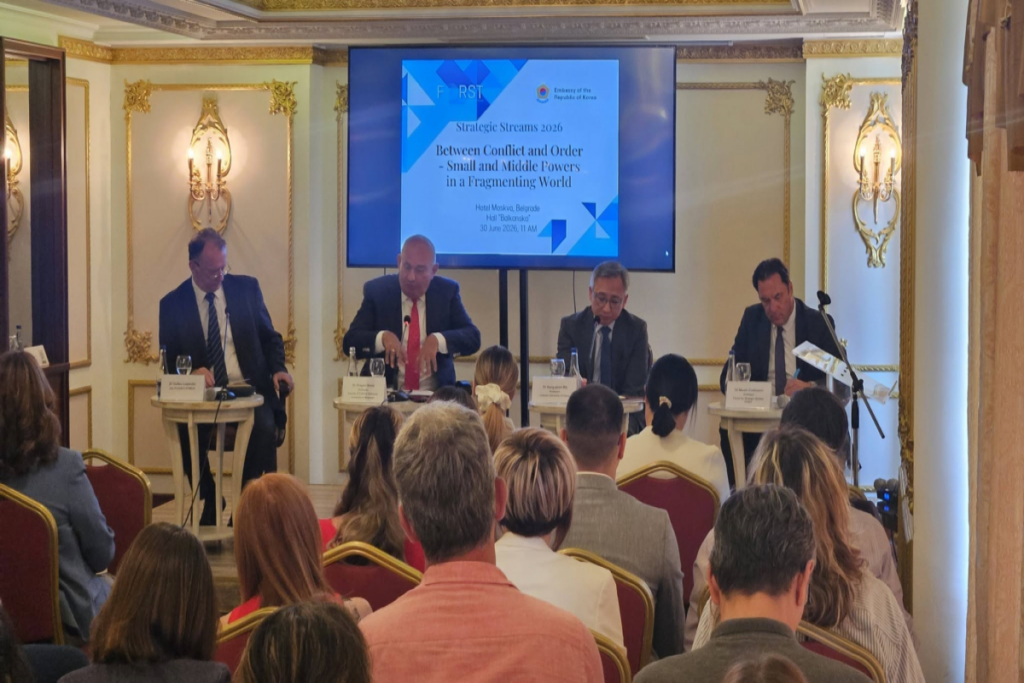
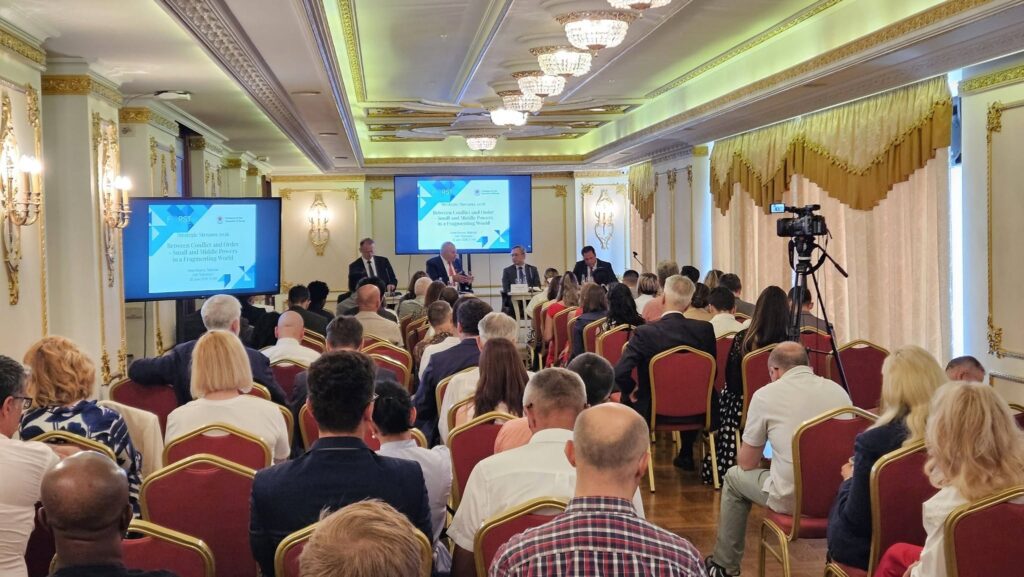
This year’s Strategic Streams 2026 conference, organized by the Forum for Strategic Studies (FORST) and the Embassy of the Republic of Korea in Serbia, was held on 30 June at the Hotel Moskva in Belgrade and, as in previous years, brought together a large number of participants from the fields of diplomacy, politics, media, international relations, and economics. By now an established forum where experts from these fields discuss the most significant geopolitical processes and challenges facing the contemporary international order, the eighth conference was held under the title Strategic Streams 2026: Between Conflict and Order – Small and Middle Powers in a Fragmented World, focusing on the position and prospects of small and middle powers amid the profound transformation of the international system. The conference was held in cooperation with now traditional partner, the Embassy of the Republic of Korea in Belgrade, a country that itself represents a significant middle power and, through various forms of international cooperation, seeks to preserve its strategic autonomy. Another objective was to present Korean experiences to the Serbian professional community and explore opportunities for cooperation between Serbia and Korea.
A particular focus of the conference was the role of small and middle powers in preserving stability and strategic flexibility, as well as their contribution to regional and global governance. The question of the role and position of small and middle powers in a changing international environment was at the center of the discussion, with particular emphasis on opportunities for cooperation and strategic alignment among states facing similar challenges. It was emphasized that the regional context is one of the significant factors determining whether a state is viewed as a small or middle power, rather than this being determined solely by its absolute capabilities and relations with major and powerful states. In a world that is becoming increasingly fragmented and fluctuating between conflict and order, cooperation among small and middle states creates opportunities to preserve strategic autonomy and exert greater influence on regional and broader international processes and alliances.
The opening address to the conference participants was delivered by the Ambassador of the Republic of Korea to Serbia, Hyung Tae KIM, who pointed to the complexity of the current international environment and the increasingly important role of small and middle powers in preserving stability.
Ambassador Kim assessed that the world is currently facing profound geopolitical uncertainty, intensifying strategic competition, the continuation of conflicts in various regions, and increasing fragmentation of the international order. In his view, it is precisely under such circumstances that cooperation among middle powers acquires particular significance.
“As a country that rose from the devastation of war to become one of the world’s leading economies and democracies, Korea firmly believes that international cooperation, open trade, and respect for international law remain the foundations of peace and prosperity,” the Ambassador said. He recalled that the Republic of Korea seeks to contribute to these goals through its active engagement in the United Nations, as well as by developing cooperation among middle powers internationally through MIKTA – an informal grouping comprising Mexico, Indonesia, Korea, Türkiye, and Australia.
Speaking about relations between Serbia and Korea, Ambassador Kim emphasized that, despite their geographical distance, the two countries share similar interests and values.
“Korea and Serbia have much in common. Our two countries are natural partners as middle powers that value strategic autonomy, international cooperation, and economic openness,” Ambassador Kim said.
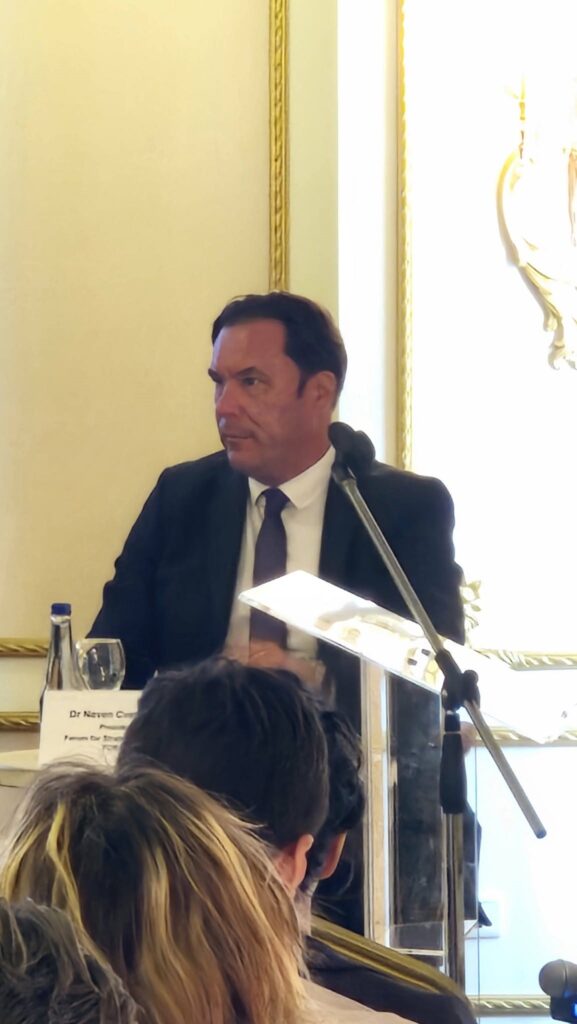
Dr. Neven Cvetićanin, President of FORST, spoke about the significance of the conference. He emphasized that its purpose is to enable serious analysis of major strategic changes while they are still unfolding, rather than only after they have become part of history. At a time of increasing uncertainty, fragmentation, and strategic vulnerability, Dr. Cvetićanin particularly highlighted the importance of open dialogue between professional and expert communities from different countries and the willingness to understand perspectives that are not necessarily identical.
According to him, cooperation between Serbia and the Republic of Korea has a particularly important place in this context, as both states are situated between different political, economic, and security centers of power and therefore have an interest in developing forms of cooperation that can provide them with greater strategic resilience and room for independent decision-making.
While moderating the conference, Dr. Cvetićanin also argued that the world is currently in a kind of “waiting room,” a period in which the new policies of the major powers are being defined and a new international order is taking shape.
“The world is in a waiting room. Nations are in a waiting room. And I agree with the thesis that, in such a situation, cooperation between states with similar strategic positions – such as South Korea and Serbia – is necessary,” he said.
According to him, the central strategic question for many states is how to preserve stability in an increasingly unstable world, pursue a responsible foreign policy, and at the same time protect national interests.
He stressed that this challenge is particularly relevant to small and middle powers, which must find a balance between principles and pragmatism, security and development, as well as national interests and international cooperation. As he noted, such states should not focus exclusively on relations with major powers, but should also strengthen cooperation among themselves, particularly when they share similar strategic positions.
Speaking about Serbia’s position, Dr. Cvetićanin rejected the notion that Serbia is a small country without significant influence, recalling the historical observation of Nikola Pašić: “I will quote Nikola Pašić, great Serbian statesman, who once said that the Serbian nation is a small nation, but that there is no greater nation between Vienna and Gevgelija in the south.”
According to him, because of its political, economic, and strategic influence on its immediate surroundings, including Bosnia and Herzegovina and Montenegro, Serbia should be viewed as a middle power in the regional context.
He also addressed the concept of independence and strategic autonomy discussed at the conference, noting that states today find themselves between reliance on their own capabilities and broader alliances. Finding the appropriate balance between these two poles will be one of the key challenges of contemporary international and national policy.
The conference focused in particular on a panel dedicated to the position and prospects of small and middle powers in a changing international environment. The panel featured Professor Sang Yoon Ma of the Catholic University of Korea in Seoul, former President of the Korean Association of International Studies and former Director-General for Strategic Planning and Policy-Making at the Ministry of Foreign Affairs of the Republic of Korea.
Professor Ma pointed to changes in the contemporary international system, pressures on the existing liberal order, and the possibilities for middle-sized states to preserve their autonomy through cooperation and strategic adaptation. In his view, institutions and norms still exist, but they are under considerable pressure and no longer form a coherent whole.
“What we see today is not pure chaos, but something much more complex – it is fragmentation,” Professor Ma said.
He explained that different components of the international system continue to exist – security alliances, trade regimes, technological standards, and regional forums – but they no longer fit together as they once did. Instead, they increasingly overlap, diverge, and come into conflict.
In such an environment, he argued, the concept of a kind of “enlightened self-interest” becomes important. States naturally seek to protect their own interests, but narrow and short-term action can ultimately undermine precisely the autonomy they seek to preserve.
“For middle powers, cooperation with others, preserving parts of the rules-based international order, and creating new forms of consultation can be a way to protect their own autonomy in the long term,” Ma said.
Speaking about the position of states situated between major powers, Professor Ma recalled a well-known Korean saying that describes a small country as a “shrimp among whales” – a creature that must move carefully in order not to become a victim of conflicts between much larger powers.
He explained that this image has long described Korea’s position, as the country historically found itself between major regional actors. However, according to him, today’s South Korea no longer belongs to that category, having developed significant economic, technological, and security capabilities. Speaking about South Korea’s changed position, Professor Ma concluded with a vivid analogy: “We consider today’s Korea to be more than a shrimp. Perhaps today it is closest to a dolphin, although it is still not a whale.”
According to him, the distinction between small and middle powers cannot be determined solely by the size of a state, but also by its regional environment. In this context, he noted that Serbia finds itself in a different situation because it is surrounded by countries of similar size or smaller states, giving it a different regional position and an important role in its immediate environment.
He stated that Korea had realized that it must cooperate with others, and not only with the United States.
“We must find and seek many more countries with which we can cooperate. It is a difficult path, but we need to expand our diplomatic efforts around the world. Second, we need reliable partners, not merely relationships based on short-term interests and transactions,” he emphasized.
The panel discussion held at Hotel Moskva also featured Professor Dragan R. Simić and Ambassador Dr. Duško Lopandić.
Professor Simić, a long-serving Dean of the Faculty of Political Sciences, warned that fundamental changes had taken place in the very structure of international relations, particularly in the field of security. He expressed pessimism regarding the current security architecture.
“We can hardly speak of collective security anymore in contemporary international relations,” Simić said. He warned that the dominant “transactional approach” of major powers directly undermines stability and threatens relations among nations.
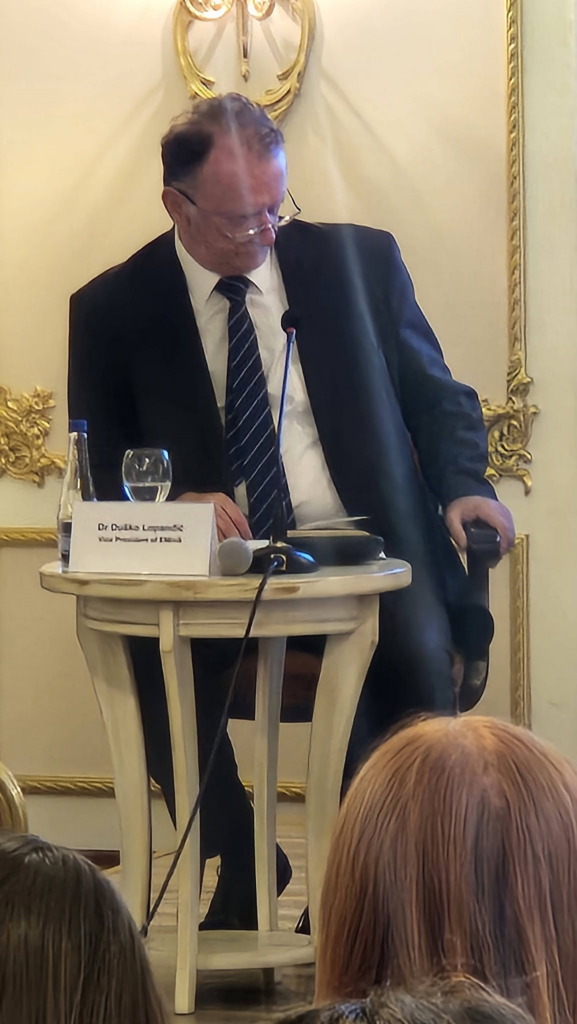
Duško Lopandić, former Ambassador of Serbia to the EU and to Portugal and current President of the Forum for International Relations of the European Movement in Serbia, followed up on these observations, describing the current global scene as a kind of “jungle.” He emphasized that under such circumstances, the question of survival is a primary concern for every state. According to him, for states of our size, it is crucial to make use of the tools at their disposal:
“The question of survival, as mentioned, is important for every country and every power, regardless of whether they are involved in conflicts or not. For middle or small powers, it is obvious that flexibility, pragmatism, and ways of influencing outcomes connected to national interests are extremely important,” Lopandić said.
One of the conclusions of the conference was that, in a world where centers of power are shifting toward Eurasia and the Indo-Pacific, no middle power can isolate itself from economic pressures or technological crises. The conference also concluded that the world is currently in a phase of waiting, as the policies of the major powers have yet to fully crystallize.
In the meantime, for states such as Serbia and the Republic of Korea, the diversification of partnerships and joint efforts to preserve and adapt the international order amid its profound transformation remain of particular importance.
It was also concluded that efforts should continue to build a network of trust among states that share similar views, positions, and dilemmas, in order to facilitate the difficult transitional period between the old order and a still undefined new architecture of the world.