


In 2019, the Forum for Strategic Studies (FORST) has launched a large annual conference project called Strategic Streams with the intention of discussing the most important strategic event that affects Europe, the Balkans and the world in a given year, with the intention of gathering distinguished experts, diplomats, decision makers, professors, scientists and high-ranking strategists from the country, the region and the world, who would exchange their opinions, insights and ideas at the Strategic Streams conference, once (or more) times a year, about future strategic trends in the 21st century. So far, the conference has been held in 2019, 2020, 2021, 2022, 2023, 2024 and 2025.
Strategic Streams 2025
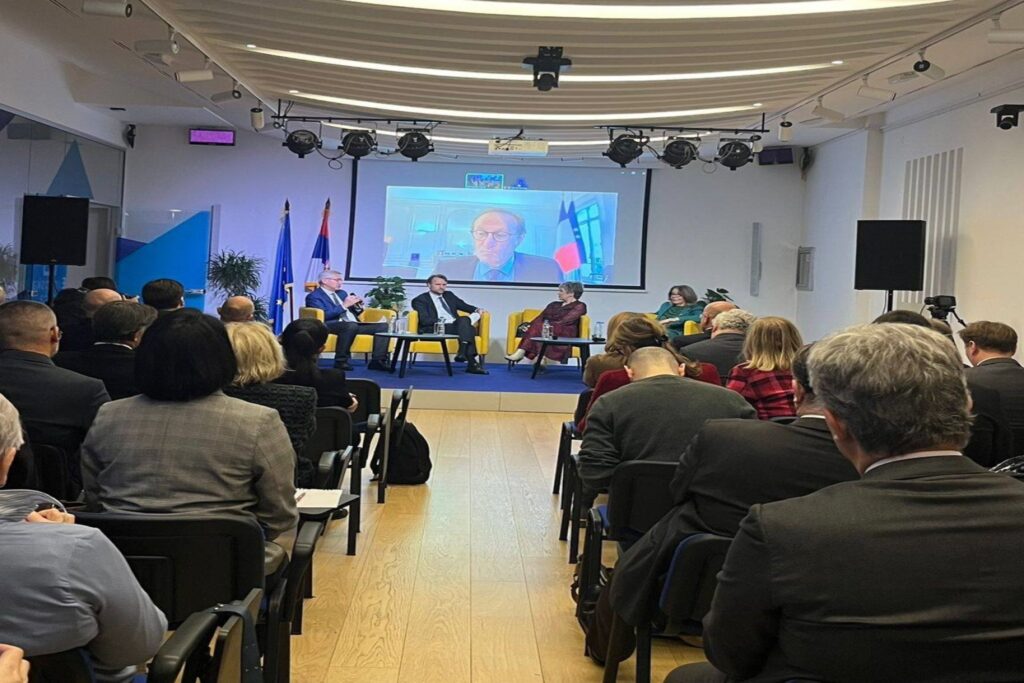
In 2025, the conference was held on December 17 at the Europe House in Belgrade under the title Strategic Streams 2025: The European Political Community Between Reality and Wishes. This year’s conference theme was dedicated to an analysis of the European Political Community (EPC), its role in the contemporary European strategic architecture, and its importance for the countries of the Western Balkans. Members of national parliaments and the European Parliament, ambassadors of European countries to Serbia, directors of European institutes, and career diplomats participated in the debate.
Discussions at the conference indicated that the EPC represents an important platform for strengthening political dialogue and cooperation among European countries, including those outside the EU, such as the United Kingdom. It was assessed that, although it is not a substitute for EU enlargement, the EPC enables equal dialogue and provides an opportunity to address geopolitical challenges such as security and migration. In this context, the future of the Balkans within this community remains important, while reforms and progress in the EU accession process remain a priority for countries of the region, such as Serbia.
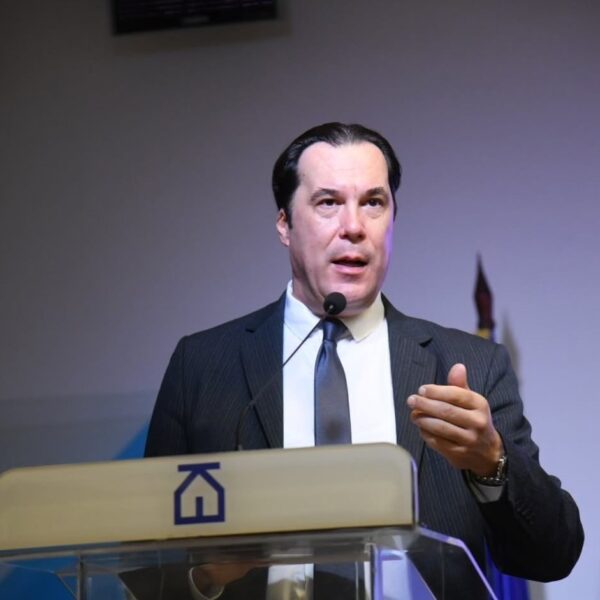 The conference, held at the Europe House, was opened by Dr. Neven Cvetićanin, President of the Forum for Strategic Studies (FORST) and Slobodan Šešum, Ambassador of the Republic of Slovenia to Serbia.
In his opening remarks, Dr. Cvetićanin emphasized that from the very beginning FORST’s activities have been marked by a clear idea—to become a serious platform for qualified and expert debate among professionals from strategic sectors, regardless of whether they come from politics, diplomacy, analytics, academia or business, focused on the key strategic issues of our time. He noted that in previous years, FORST’s Strategic Streams conferences were dedicated to important topics — from the geopolitics of the COVID-19 pandemic to Europe after Angela Merkel. He stressed that FORST is not a forum that offers ready-made answers, but rather a platform through which strategic actors from the region, Europe and the world can pose key strategic questions in order to attempt to reach sustainable answers through high-level debate.
Dr. Cvetićanin also pointed out that one of the greatest weaknesses of both European and contemporary politics in general is the loss of capacity for long-term strategic thinking, and that today both European and Serbian societies suffer from a lack of qualified debate, as exchanges of opinions often take place within closed information bubbles—an especially challenging issue for the post-conflict region of the Western Balkans. He emphasized that dialogue among institutions, states, and the entire Western Balkans region is not only possible, but necessary. Finally, he underlined that Serbia, both today and in the future, needs progressive, coherent, and far-sighted statesmanship to overcome the geopolitical challenges it faces, rather than zig-zag policies.
Opening remarks were also delivered by the Ambassador of Slovenia to Serbia, Slobodan Šešum, who said that the Western Balkans has held an important place in the European Political Community since its establishment. Šešum stated that Slovenia views the EPC as an opportunity for the consolidation of Europe, adding that Slovenia’s position is that the EPC should complement the role of the European Union, not replace it. He emphasized that the Western Balkans occupies an important place within the EPC and added that the EPC has, for the first time, enabled countries of the region to engage on an equal footing in discussions with EU leaders. He also noted that it is legitimate to consider whether the EPC has become what it was intended to be, adding that the European Political Community has demonstrated its ability to bring European countries together in times of crisis.
The first panel of the conference, titled The European Political Community as a Geopolitical Instrument and the Position of the Western Balkans in Geopolitical Europe – Between Reality and Expectations, was moderated by Zoran Stanojević, journalist at Radio Television of Serbia. Panelists included Andreas von Beckerath, EU Ambassador to Serbia; Elvira Kovač, Chair of the European Integration Committee of the National Assembly of Serbia; Bruno Fuchs, Chair of the Foreign Affairs Committee of the French National Assembly (via Zoom); Pernille Dahler Kardel, Ambassador of Denmark to Belgrade; and Matjaž Nemec, Member of the European Parliament (via recorded video statement).
EU Ambassador to Serbia Andreas fon Beckerath assessed that, in contemporary European circumstances, the European Political Community is not a substitute for the enlargement policy. “I think it is quite clear that the European Political Community does not replace any of the institutions we have on our continent—neither the European Union, nor the OSCE, nor NATO, nor the Council of Europe. It has a complementary and supportive role”, Beckerath said at the conference organized by the Forum for Strategic Studies.
As he emphasized, the EPC has a very important role because it “brings together, more or less, our entire continent—all 27 EU member states, as well as around 20 other European countries.”
“I believe it is an excellent platform for exchanging ideas and views on numerous challenges facing our continent, especially when it comes to security, cyber security, organized crime, as well as issues such as migration and other security challenges arising, among other things, from Russia’s full-scale intervention in Ukraine,” the Head of the EU Delegation to Serbia stated.
He noted that heads of state and government with whom he has spoken emphasize that one of the greatest added values of the EPC is not only the plenary sessions, but also the bilateral meetings held on the margins of these summits. He added that after a quarter century of work in diplomacy, he has learned that the best way to assess whether a platform or forum is considered useful and relevant is to look at the level of participation.
“We have seen the presence of presidents and prime ministers at the highest level at all EPC meetings,” he recalled.
Elvira Kovač, Chair of the European Integration Committee of the Serbian Parliament, emphasized that for Western Balkan countries the most important message is that the EPC is not an alternative to EU enlargement.
“We must constantly emphasize this, because it is very important. Recently, we have heard many different ideas about how this process should be conducted, or even proposals that new member states should be ‘some kind of different’ members—with or without voting rights in certain areas,” Kovač said.
She pointed out that the will and hope for Serbia to finally become an EU member are, unfortunately, slowly weakening, adding that decision-making within the EU is extremely complex.
“Achieving consensus among such a large number of member states, the obstacles faced by candidate countries, the constant possibility of stagnation in the process, as well as the way all this is explained to the public—and how internal consensus is achieved in Serbia—make this process extremely complex,” Kovač stated.
Bruno Fuchs, Chair of the Foreign Affairs Committee of the French National Assembly joined the conference via Zoom and explained during his address the reasons why French President Emmanuel Macron proposed the concept and format of the European Political Community in 2022, sharing how the French political elite views this concept. He linked the concept to the French idea of the European Union’s strategic autonomy, to which the idea of the European Political Community is complementary.
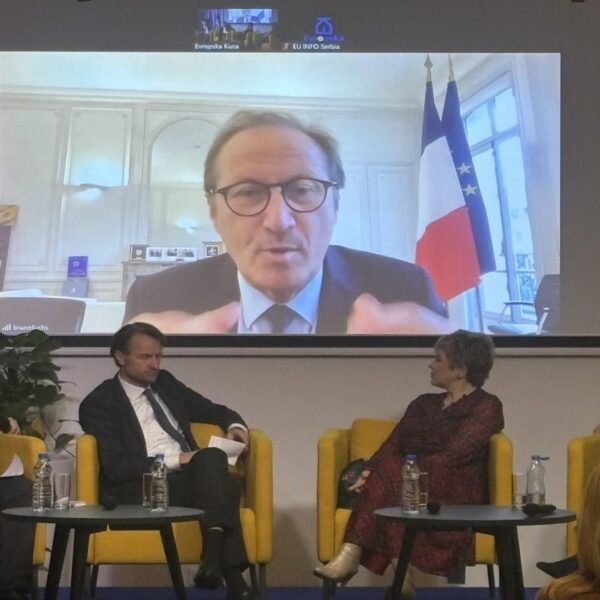 He then spoke about the importance of the Western Balkans for the European Union and particularly for the concept of the EPC, given that some Western Balkan countries are not yet EU members but participate in the EPC format. He also highlighted the importance of Serbia for the Western Balkans region, which France recognizes as a key actor in maintaining peace and security in the region.
Pernille Dahler Kardel, Ambassador of Denmark to Belgrade then addressed the audience as the ambassador of the country holding the presidency of the European Council at the time of the conference and the country that hosted the most recent EPC summit on October 2, 2025, in Copenhagen. She spoke about the priorities of the Danish presidency of the European Council and the European Union, emphasizing that the moment for EU enlargement has returned due to broader geopolitical circumstances. She agreed with EU Ambassador Andreas von Beckerath that the European Political Community is not a substitute for enlargement, but rather a complementary format and support platform to the European Union.
At the very end of the first panel participants were addressed via a recorded video message by Matjaž Nemec, Member of the European Parliament from Slovenia. In his brief video address—since he was unable to participate in the planned online discussion via Zoom due to a simultaneous plenary session of the European Parliament—MEP Nemec reflected on the positions of different political groups in the European Parliament regarding the concept of the European Political Community. He also addressed the continuation of the EU enlargement process to the Western Balkans, emphasizing the sincere commitment of the Republic of Slovenia to this process and to European unity in general, including through the format of the European Political Community.
The second panel titled The European Political Community: A Platform of Unity or a Geopolitical Dream, was moderated by Dr. Neven Cvetićanin. Participants included Florence Ferrari, Ambassador of the French Republic to Serbia; Edward Ferguson, Ambassador of the United Kingdom to Serbia; Kamil Hasiev, Ambassador of the Republic of Azerbaijan to Serbia; and Emmanuel Dupuy, President of the Institute for European Perspectives and Security from Paris.
Ambassador of France in Serbia Florence Ferrari reminded participants that the EPC is a French idea. “The idea emerged during the last French presidency of the EU in 2022 in Strasbourg, which is symbolic in itself, and on May 9, which also has special significance. It marked the conclusion of the Conference on the Future of Europe—a form of democratic dialogue among European citizens. On that day, on the one hand, President Macron, as France held the presidency, and on the other hand the EU institutions, reviewed all the ideas that emerged during that process. Macron then added a personal initiative—the European Political Community”, Ferrari stated.
As she added, this was three months after the start of Russia’s intervention in Ukraine, and there was an urgent need to think about security in a broader framework than the EU alone.
According to Ferrari, the European Political Community represents, in a sense, a return to traditional European diplomacy—informal discussions without a strictly defined agenda and among equal participants.
“The core strategic purpose of the EPC today is the same as it was three years ago, when it was established: how to contribute to greater political coherence in Europe beyond the framework of EU membership. The best proof of its success is that, three years after its launch in Prague, all members have taken ownership of it and made it their own”, Ferrari said. “This is a clear sign that the format makes sense and is useful”, she added.
UK Ambassador to Serbia Edward Ferguson emphasized that the key strength of the European Political Community lies in its flexibility, as well as in its ability to focus on issues of pan-European security, but also on specific issues such as migration, where bringing states together is crucial because solutions must cover entire migration routes.
Recalling that the United Kingdom is no longer a member of the European Union, he stressed that it remains a European country committed to the security, stability, and prosperity of the shared European continent. “It is important that, as before, we can continue to cooperate with our European partners on issues of common interest”, Ferguson said.
When asked by the panel moderator what the United Kingdom sees as its primary strategic framework — whether the Commonwealth, the European Political Community, or another concept — Ambassador Ferguson replied that the United Kingdom primarily views NATO and membership in the Alliance as its main strategic framework.
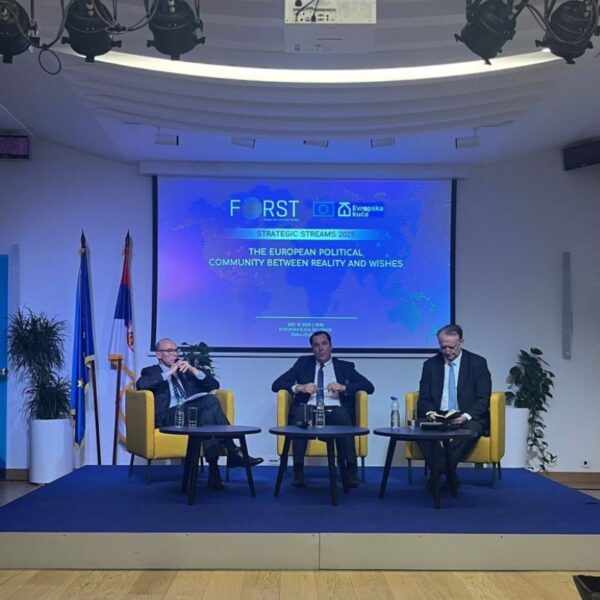 Kamil Khasiyev, Ambassador of the Republic of Azerbaijan to Serbia, spoke about Azerbaijan’s experiences in participating in various international formats, particularly in relation to the conflict in the Karabakh region. He stated that experience has shown that, with due respect to all international formats and organizations, international law and the UN Charter are the key frameworks for resolving disputes between states, alongside respect for other international formats, including the European Political Community, which has its own value for dialogue among different European countries.
At the end of the second panel, Emmanuel Dupuy, President of the Institute for European Perspectives and Security from Paris, as the sole representative of the think-tank sector among the panel’s ambassadors, adopted a less formal approach. He emphasized the need to create new diplomatic and security formats in Europe, such as the European Political Community, which has existed for only a few years. In this context, he proposed a kind of European “security council” composed of the continent’s most significant strategic powers — France, the United Kingdom, Germany, Italy and Poland. This was followed by a discussion on the possibility of establishing a similar “security council” for the Western Balkans, consisting of key regional states such as Serbia, Croatia and Bosnia and Herzegovina, based on the premise that regional peace would be ensured if these countries, which have had numerous unresolved issues in the past, jointly participated in a new diplomatic format. In this way, the Strategic Streams conference demonstrated that it is not only a venue for realistic analysis of the current situation, but also a platform for testing proposals for new diplomatic formats in Europe and the region.
In the concluding part of the conference, Jan Bondy, Ambassador of the Czech Republic to Serbia; Dr. Duško Lopandić, President of the Forum for International Relations of the European Movement in Serbia and Dr. Neven Cvetićanin, President of the Forum for Strategic Studies, presented the key positions and conclusions of the conference based on discussions from the previous panels. All participants in the concluding panel agreed on the importance of continuing dialogue and cooperation within the European Political Community as an important platform for European coherence and stability. They also agreed that, as in previous years, the Strategic Streams conference brought together this year in one place the ideas and observations of distinguished figures from diplomacy, politics, and academia, and expressed expectations that the conference would continue to serve as an important platform for exchanging views and finding common solutions to the challenges facing Europe.
The conference concluded with a cocktail reception and networking, giving participants and guests the opportunity for additional discussions and exchanges of views on key issues related to Europe’s future and security.